From Program Data to Business Decisions
At ComEd, I supported the evaluation of utility programs by integrating economic analysis, operational data, and business context to build a more complete picture of program performance. My work went beyond simply pricing a program. I focused on the value it created and how that insight could inform smarter investment and program decisions.
My role
Program Evaluation · Benefit-Cost Analysis · Business Case Development · Economic Research
My Approach
01-Understand
Define the program, its objectives, costs, and expected impact.
02-Analyze
Evaluate costs and benefits using program data, assumptions, and economic inputs.
03-Compare
Assess results across scenarios to understand trade-offs and potential value.
04-Recommend
Translate the analysis into clear findings that can support business decisions.
Interruption Customer Estimator (ICE Calculator)
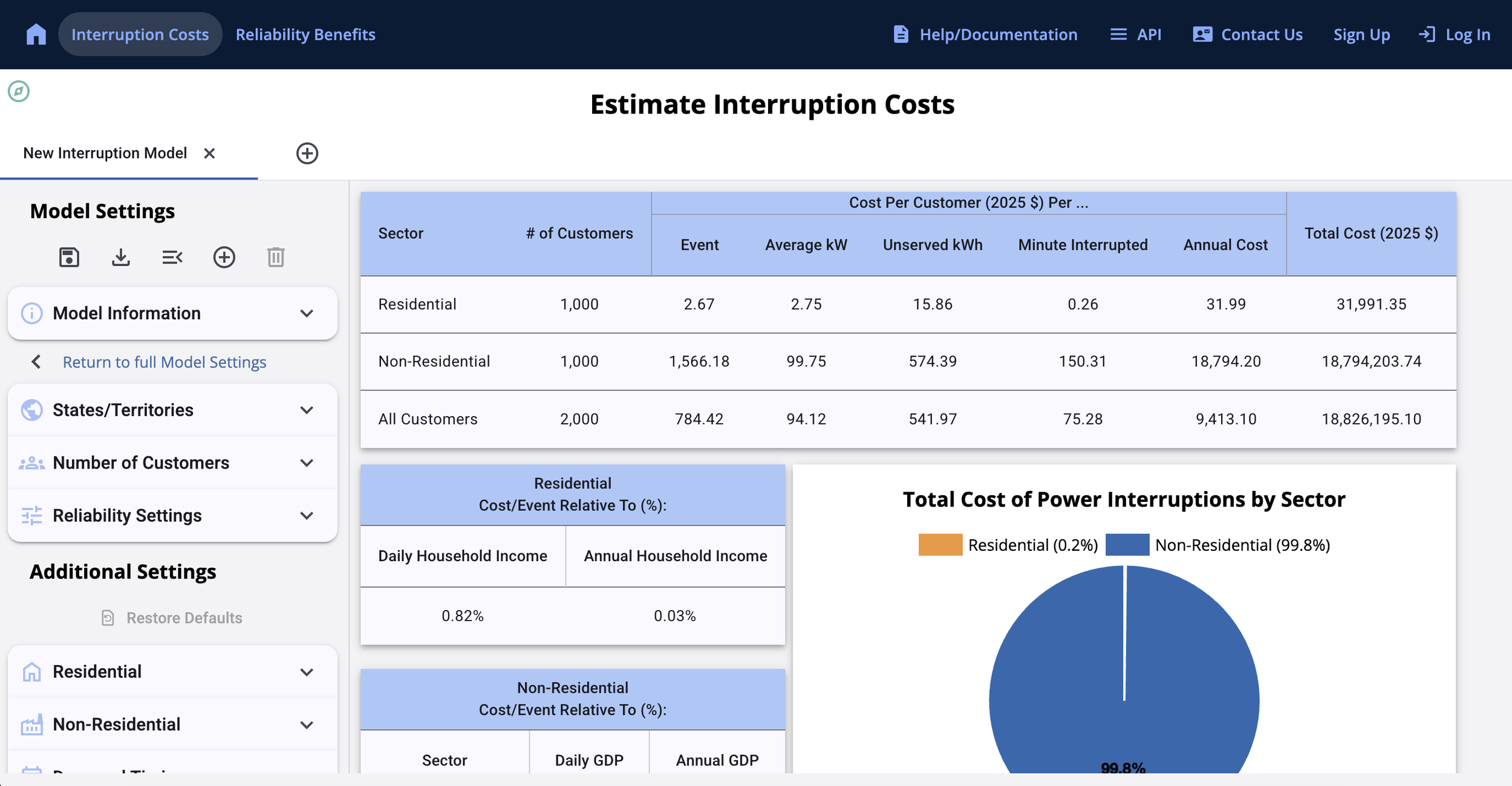
*These numbers are all made up; this is strictly to illustrate what this specific tool looks like*
I supported the evaluation of program impacts and investment decisions, drawing on inputs such as resident and non-resident customer counts, reliability metrics like System Average Interruption Frequency Index (SAIFI) and System Average Interruption Duration Index (SAIDI). Bringing these pieces together allowed me to assess how changes in reliability and program performance translated into real customer and economic benefits. Ultimately, the analysis turned complex utility data into a clearer picture of program value, providing quantitative support for broader business and investment decisions.
Why does this matter?
Reliability metrics are more than just measures of operational performance. Changes in outage frequency and duration carry real economic consequences for customers and businesses alike. Using the ICE Calculator, I was able to connect these technical reliability measures to their broader economic impact and incorporate that value directly into program evaluation.
Takeaways
Good analysis doesn't end with a number. It explains what that number means and why it matters.
This experience strengthened my ability to translate complex data into clear, actionable business insights and reinforced the importance of communicating analysis in a way that supports sound decision-making.